
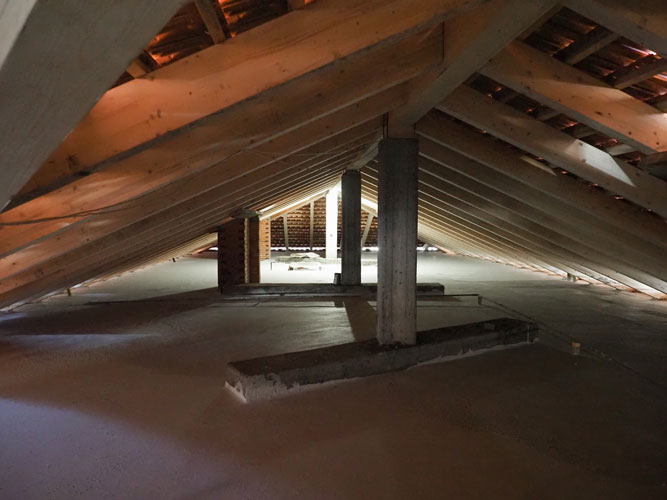
Tucson attics regularly reach 150-170 degrees during summer afternoons. This extreme heat radiates downward into living spaces, forcing air conditioning systems to work continuously against the thermal load. Inadequate attic ventilation traps this heat, driving up energy costs while shortening the lifespan of roof materials and stressing HVAC equipment.
Proper ventilation removes trapped heat through continuous airflow. Cool air enters through the eaves, while hot air exhausts at the ridge or in high-roof areas. This natural convection process significantly reduces attic temperatures when designed correctly for desert conditions.
Why Attic Ventilation Matters in Desert Heat
The Heat Accumulation Problem
Roofing materials absorb intense solar radiation throughout Tucson’s long summer days. Surface temperatures reaching 160-170 degrees transfer heat through the sheathing into attic spaces. Without adequate ventilation, this heat accumulates with nowhere to escape.
Consequences of Poor Attic Ventilation:
- Attic temperatures exceeding 170 degrees
- Increased cooling costs from constant heat load
- Shortened roof material lifespan from heat exposure
- HVAC equipment stress and premature failure
- Reduced insulation R-value effectiveness
Adequate ventilation prevents these issues by continuously exchanging hot attic air with cooler outside air.
Temperature Reduction Expectations
Effective attic ventilation operates on the principle of temperature differential. Hot air rises naturally while cooler air sinks. Properly designed systems harness this natural convection to create continuous airflow.
Cool outside air enters through soffit vents at eaves. This air flows upward through the attic space, warming as it absorbs heat. The heated air rises to the exhaust vents at the ridge or upper roof areas.
Achievable Temperature Reductions:
- Unventilated attics: 160-170 degrees typical
- Poorly ventilated attics: 140-150 degrees
- Properly ventilated attics: 120-130 degrees
- Well-designed systems: 110-120 degrees achievable
Even achieving 120-degree attic temperatures represents a 40-50 degree reduction. This substantial difference translates directly into reduced cooling costs and improved comfort.
Intake Ventilation Requirements
Soffit Vent Importance
Intake ventilation at soffits provides the foundation for effective attic ventilation. Without adequate intake, exhaust vents cannot function properly. Air must enter the system to replace exhausted hot air.
Many Tucson homes have blocked or insufficient soffit ventilation. Paint accumulation, insulation pressed against soffits, or inadequate initial installation create intake restrictions.
Soffit Vent Requirements:
- Continuous soffit vents provide the best performance
- Total intake area must equal or exceed the exhaust area
- Vents must remain unobstructed by insulation
- Screen mesh prevents pest entry while allowing airflow
Professional roof installation includes proper intake ventilation coordination, ensuring the complete system functions correctly.
Exhaust Ventilation Systems
Ridge Vents Performance
Ridge vents installed along roof peaks provide continuous exhaust ventilation. These vents create openings at the highest point where hot air naturally accumulates.
Ridge Vent Advantages:
- Continuous ventilation along entire ridge length
- No moving parts to fail or require maintenance
- Visually unobtrusive appearance
- Weather-resistant design prevents rain intrusion
- Even ventilation distribution across attic space
Ridge vents require adequate intake ventilation to function effectively. The combination of continuous soffit intake and ridge exhaust creates optimal ventilation performance.
Turbine Vent Effectiveness
Turbine vents use wind power to enhance exhaust ventilation. The rotating turbine creates vacuum that draws hot air from attics. When wind blows, turbines provide superior ventilation compared to static vents.
Turbine Vent Considerations:
- Excellent performance on windy days
- Reduced effectiveness during calm conditions
- Require periodic maintenance for bearing lubrication
- Multiple units needed for adequate coverage
Tucson’s frequent afternoon winds make turbines effective during peak heat hours when ventilation matters most.
Powered Attic Fans
Electric attic fans force air exchange through powered exhaust. These fans activate based on temperature settings, providing mechanical ventilation regardless of wind conditions.
Powered Fan Trade-offs:
- Guaranteed ventilation during hottest periods
- Electricity consumption offsetting some savings
- Maintenance requirements for motors and controls
- Higher initial installation costs
Properly designed passive systems usually provide adequate performance without ongoing electricity costs.
Balanced Ventilation System Design
Calculating Ventilation Requirements
Building codes specify minimum ventilation requirements based on attic square footage. The standard calculation requires one square foot of net free ventilation area per 150 square feet of attic space.
Example Calculation:
- 1,500 square foot attic space
- Required ventilation: 1,500 ÷ 150 = 10 square feet
- Intake requirement: 5 square feet
- Exhaust requirement: 5 square feet
These minimum requirements provide baseline ventilation. Enhanced ventilation using higher ratios improves performance in extreme desert heat.
Common Ventilation Mistakes
Frequent Ventilation Errors:
- Insufficient intake ventilation choking exhaust
- Blocked soffit vents preventing intake airflow
- Inadequate total ventilation area for attic size
- Improper baffle installation at eaves
Professional roof repairs often include ventilation assessment and correction when inadequate systems contribute to roof problems.
Insulation and Ventilation Coordination
Maintaining Airflow Channels
Insulation and ventilation must work together without interference. Insulation pushed against the roof sheathing, blocking ventilation channels.
Proper Airflow Management:
- Baffles maintain clear channels from the soffit to the ridge
- Insulation stops before blocking soffit vents
- Adequate clearance between insulation and sheathing
- Regular inspection to ensure channels remain clear
Rafter baffles made from rigid foam or formed plastic maintain these essential airflow paths. Installing baffles during roof replacement ensures proper ventilation system function.
Insulation R-Value Considerations
Adequate insulation complements ventilation in reducing heat transfer into living spaces. Current Arizona building codes require a minimum R-30 of attic insulation. Many energy-efficient homes exceed this with R-38 or R-49 insulation.
The combination of quality insulation and effective ventilation provides maximum cooling cost savings and improved comfort.
Energy Savings from Proper Ventilation
Cooling Cost Reduction
Proper attic ventilation reduces air conditioning costs measurably. The exact savings depend on home size, insulation levels, and the adequacy of existing ventilation.
Typical Energy Savings:
- 10-15% cooling cost reduction is common
- 20-25% savings are possible in poorly ventilated homes
- Payback periods of 3-5 years for ventilation improvements
These savings accumulate over decades. A $30 monthly reduction in summer cooling costs saves $360 annually. Over 20 years, this represents $7,200 in avoided electricity expenses.
Extended Equipment Lifespan
Reduced cooling loads extend HVAC equipment lifespan. Air conditioners working continuously against extreme attic heat experience accelerated wear. Proper ventilation reduces runtime hours, decreasing mechanical stress.
Extended equipment life delays expensive replacement costs. Central air conditioning systems cost $5,000-10,000 to replace.
Monsoon Season Considerations
Preventing Rain Intrusion
Ventilation systems must prevent rain entry during monsoon storms. Wind-driven rain tests every roof opening. Quality ventilation products incorporate design features preventing water intrusion while maintaining airflow.
Rain Prevention Features:
- Baffles deflecting wind-driven moisture
- Weatherproof ridge vent designs
- Proper turbine installation prevents leaks
- Quality flashing at ventilation penetrations
Post-storm roof inspections should include an assessment of the ventilation system.
Retrofit Ventilation Improvements
Many Tucson homes have inadequate ventilation due to their original construction. Retrofitting improved ventilation provides measurable benefits without complete roof replacement.
Retrofit Improvement Options:
- Adding ridge vents to homes without them
- Installing additional turbines or static vents
- Opening blocked soffit ventilation
- Adding baffles to maintain airflow channels
Professional evaluation identifies the most cost-effective improvements for specific situations.
Maximize Comfort with Proper Ventilation
Attic ventilation significantly impacts comfort and energy costs in Tucson’s extreme heat. Properly designed systems reduce attic temperatures by 40-50 degrees, translating directly into lower cooling costs and improved comfort.
Bob’s Custom Roofing has designed and installed ventilation systems across Tucson since 1972. Our experience with desert heat guides recommendations that actually reduce temperatures and costs. Whether installing new roofs with integrated ventilation or retrofitting improvements to existing homes, we deliver solutions proven effective in Southern Arizona conditions.
Contact us today for ventilation solutions engineered to combat Tucson’s extreme attic heat.