
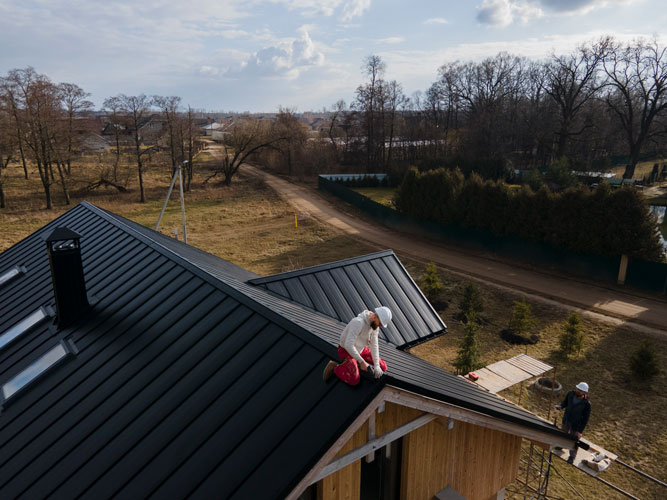
Tucson roofs endure one of the most punishing daily routines in the country. Summer surface temperatures reach 160-170 degrees during afternoon hours, then plummet 40-50 degrees overnight. This dramatic temperature swing repeats 365 days annually, creating constant expansion and contraction cycles that stress every roofing component.
This phenomenon, called thermal cycling, accelerates material aging and causes failures that rarely occur in moderate climates. Understanding how temperature extremes affect roofing systems helps property owners recognize damage patterns and plan appropriate maintenance strategies.
What Is Thermal Cycling?
The Expansion and Contraction Process
All materials expand when heated and contract when cooled. The rate and extent of this movement vary by material type. Metals expand and contract significantly. Plastics change dimension noticeably. Even rigid materials like concrete and ceramic experience measurable movement.
Roofing materials face extreme temperature ranges. A dark shingle reaching 165 degrees in afternoon sun cools to 115 degrees by sunrise. Metal flashing experiences even greater temperature swings. This daily movement accumulates tremendous stress over months and years.
Daily Temperature Cycle Impact:
- Afternoon: Materials expand to maximum dimensions
- Evening: Rapid cooling begins contraction
- Night: Materials reach minimum dimensions
- Morning: Heating cycle restarts expansion
- Repeat: Process occurs daily without pause
Each cycle stresses fasteners, seams, and connections. Materials attached firmly at moderate temperatures find themselves pulled and compressed as temperatures swing through extreme ranges.
Why Tucson’s Climate Intensifies the Problem
Tucson’s desert environment creates ideal conditions for severe thermal cycling. Clear skies allow intense daytime solar heating and rapid radiative cooling at night. Low humidity provides minimal temperature buffering. High elevation increases both heating intensity and nighttime cooling rates.
The combination produces temperature swings exceeding those in most American cities. While humid climates experience smaller daily ranges and cloudy regions see moderated extremes, Tucson roofs face relentless thermal stress year-round.
How Thermal Cycling Damages Different Roofing Materials
Asphalt Shingle Stress
Asphalt shingles expand and contract with temperature changes. The organic mat or fiberglass base supporting asphalt layers moves differently from the asphalt itself. This differential movement creates internal stress within the shingle structure.
Thermal Cycling Effects on Shingles:
- Fastener holes enlarge as material moves around nails
- Edge curling from repeated expansion cycles
- Surface cracking in aged, less flexible materials
- Granule loss accelerated by surface stress
- Seal strip failures from movement at adhesive bonds
Newer shingles tolerate thermal movement better due to flexibility. Aged shingles become rigid and brittle, making thermal stress more damaging. The same temperature swing that causes minor movement in new shingles creates cracks in materials installed 15-20 years earlier.
Metal Component Movement
Metal roofing components expand more dramatically than most materials. A 20-foot section of metal flashing can expand and contract nearly half an inch through daily temperature cycles. This significant movement must be accounted for in the installation design.
Improperly installed metal components become stressed at attachment points. Rigid connections prevent natural expansion and contraction. This constraint builds stress that eventually causes fastener failure, material distortion, or connection separation.
Professional roof installation accounts for thermal movement, using techniques that accommodate expansion while maintaining weather-tight integrity.
Tile Roofing and Thermal Stress
Clay and concrete tiles experience minimal thermal expansion compared to other materials. However, tiles aren’t immune to thermal cycling effects. Temperature changes affect the entire roofing assembly, including underlayment, battens, and fastening systems.
Tile System Thermal Concerns:
- Underlayment brittleness from temperature extremes
- Fastener loosening from repeated movement cycles
- Batten expansion is different from tile expansion
- Mortar joint cracking at ridge and hip applications
- Tile movement at overlap points
The tile itself remains stable, but supporting components face thermal stress. This explains why tile roofs with decades of remaining tile life sometimes require underlayment replacement or fastener reinforcement.
Fastener and Connection Failures
Nail and Screw Stress
Fasteners hold roofing materials against tremendous forces including wind loads, thermal movement, and material weight. Thermal cycling adds another stress dimension. Materials that expand and contract around fixed fasteners gradually enlarge attachment holes.
This hole enlargement reduces fastener holding power. A nail driven into the material at 80 degrees ends up in an oversized hole after months of thermal cycling. The material has moved around the fastener thousands of times, abrading and distorting the original tight connection.
Signs of Thermal Fastener Damage:
- Exposed fastener heads where materials have moved
- Loose or “popped” nails visible on roof surface
- Shingles or tiles with movement at fastener locations
- Metal panels showing elongated fastener holes
- Increased wind damage vulnerability
Regular roof inspections catch fastener problems before complete failure. Re-fastening materials with properly sized and located fasteners restores attachment integrity.
Sealant Bond Stress
Sealants create flexible, waterproof bonds at joints and penetrations. These bonds must accommodate movement from thermal cycling while maintaining weather-tight seals. Quality sealants tolerate significant movement, but Tucson’s temperature extremes challenge even premium products.
Repeated thermal cycling causes sealant fatigue. The material stretches during expansion phases and compresses during contraction. After thousands of cycles, even flexible sealants lose elasticity and develop cracks or debonding.
Seam and Joint Separation
Built-Up Roofing Seam Stress
Built-up roofing systems use overlapping layers bonded with asphalt or adhesives. These seams must remain bonded despite thermal movement of large roof sections. Temperature changes cause roof areas to expand and contract at slightly different rates depending on sun exposure and material thickness.
Thermal Seam Failure Progression:
- Initial installation creates strong seam bonds
- Thermal cycling begins to stress seam edges
- Repeated movement gradually weakens adhesion
- Small separations develop at seam edges
- Water infiltration accelerates further separation
Commercial roof coating reinforces existing seams while providing monolithic waterproofing that eliminates seam vulnerability to thermal stress.
Ridge and Hip Vulnerability
Ridge caps and hip shingles cover critical junctions where roof planes meet. These areas experience maximum thermal movement as materials from different roof sections expand and contract. Fasteners at ridges and hips face stress from multiple directions simultaneously.
The combination of maximum movement and multi-directional stress makes ridges and hips particularly vulnerable to thermal cycling damage. Wind-driven rain often penetrates these areas first when thermal movement compromises seals and attachments.
Flat Roof Membrane Challenges
Single-Ply Membrane Movement
Modern single-ply membranes like TPO and PVC cover commercial roofs with large, continuous sheets. These membranes expand and contract significantly with temperature changes. A 10,000-square-foot roof section can change dimensions by several inches over daily thermal cycles.
Properly installed membranes accommodate this movement through careful seam construction and strategic fastening patterns. Improper installation creates stress concentrations where movement is constrained.
Thermal Stress Points on Membranes:
- Penetration flashings where the membrane connects rigidly
- Parapet and wall flashings at perimeter transitions
- Equipment curbs and rooftop unit attachments
- Drainage fixtures and overflow scuppers
- Seam locations where sections connect
Regular maintenance addresses thermal stress damage before small problems propagate across entire roof sections.
Prevention and Mitigation Strategies
Material Selection for Thermal Tolerance
Choosing materials engineered for thermal cycling provides the first defense against temperature-related damage. Some products are specifically designed for high-thermal-stress applications, with enhanced flexibility and improved fastening systems.
Thermally Resistant Material Features:
- Enhanced flexibility, maintaining performance across temperature ranges
- Fastening systems designed for movement accommodation
- Sealants formulated for extreme thermal cycling
- Underlayments resistant to temperature extremes
- Expansion jointsare planned into large roof sections
Experienced contractors understand which materials perform reliably in Tucson’s demanding thermal environment versus products that fail prematurely despite adequate performance elsewhere.
Proper Installation Techniques
Installation quality dramatically affects thermal cycling resistance. Proper fastener placement, appropriate spacing, and correct sealing techniques accommodate thermal movement while maintaining secure attachment.
Installation Factors for Thermal Performance:
- Fastener spacing allows controlled movement
- Edge and perimeter details designed for expansion
- Sealant applications at appropriate joint widths
- Metal component installations with movement accommodation
- Proper underlayment attachment prevents constraint
Professional roof repairs restore proper installation details when thermal damage develops, preventing minor issues from becoming major failures.
Maintenance Timing Considerations
Thermal cycling damage accumulates gradually. Annual inspections identify developing problems while repairs remain straightforward. Inspecting roofs before the monsoon season, catching thermal damage before summer storms, tests compromised areas.
Inspection Focus Areas:
- Fastener condition and material attachment security
- Seam integrity at laps and connections
- Sealant condition around penetrations and transitions
- Ridge and hip attachment security
- Signs of material movement at edges and perimeters
Proactive repairs addressing thermal damage cost significantly less than emergency repairs after storm-related failures in thermally compromised areas.
Long-Term Thermal Cycling Impact
Accumulated Damage Over Time
Thermal cycling damage accumulates invisibly over the years. Each daily cycle contributes to microscopic stress. Individually insignificant, these stresses compound into visible damage after sufficient repetitions.
A roof system tolerating 20 years of thermal cycling in moderate climates might show serious stress damage after 15 years in Tucson. This shortened lifespan reflects the cumulative impact of more extreme daily temperature swings.
Understanding realistic service life expectations for Tucson conditions helps property owners budget appropriately for maintenance and eventual roof replacement.
Protect Your Roof from Thermal Stress
Thermal cycling represents a constant, unavoidable challenge for Tucson roofing systems. Every temperature swing stresses materials, fasteners, and seals. Understanding these effects helps property owners recognize thermal damage and implement appropriate maintenance strategies.
Bob’s Custom Roofing has addressed thermal cycling challenges since 1972. Our experience with Tucson’s extreme temperature swings guides material selection, installation techniques, and maintenance recommendations to minimize thermal-stress damage.
Whether installing new roofs engineered for thermal cycling resistance, repairing thermal damage, or maintaining existing systems, our team provides expertise proven across decades of desert roofing.
Contact us today for roofing solutions engineered to withstand Southern Arizona’s extreme thermal cycling.