
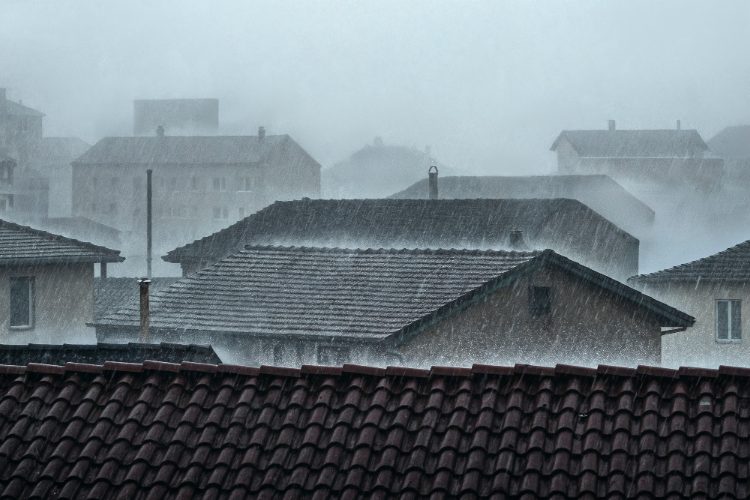
If you’re a Tucson homeowner, you know arizona monsoon roof damage isn’t just a possibility, it’s practically guaranteed without proper preparation. Every June through September, your roof faces wind gusts up to 70 mph, marble-sized hail, and sudden temperature drops of 30 degrees in minutes.
Monsoon storms cause specific damage patterns to Arizona roofs: wind lifts tile edges creating gaps for water intrusion, debris punctures flat membranes and cracks clay tiles, rapid temperature changes stress roofing materials through thermal shock, and dust accumulation blocks drainage systems leading to ponding water and leaks.
How Do Monsoons Specifically Damage Arizona Roofs?
Tucson’s monsoon season creates a perfect storm of roofing challenges unique to our desert climate. Unlike typical rainstorms, monsoons combine multiple destructive forces that attack your roof simultaneously.
The infamous haboob dust storms arrive first, depositing pounds of fine sand into every crevice. This dust clogs valley channels and scuppers, preventing proper drainage when the rain follows. Within minutes, temperatures can plummet from 110°F to 80°F, causing roofing materials to contract violently.
Wind damage happens in seconds. Microbursts, those sudden downward air blasts common in Tucson storms, create uplift forces that can peel back entire sections of flat roofing or send clay tiles requiring immediate repair flying like frisbees. A 2025 University of Arizona study found that 62% of monsoon roof damage occurs within the first 10 minutes of storm arrival.
Wind Uplift and Tile Displacement
Clay and concrete tiles, while popular in Tucson, become projectiles during monsoons. Wind speeds above 50 mph create negative pressure zones that literally suck tiles upward. Once one tile lifts, it creates a domino effect, exposing underlayment to rain.
Flat roofs face different challenges. TPO and modified bitumen membranes can balloon upward when wind finds an unsealed edge. A single 2-inch gap in perimeter flashing can allow wind to peel back 100 square feet of membrane in under a minute.
Thermal Shock From Temperature Drops
Your roof expands in 115°F afternoon heat, then contracts rapidly when monsoon clouds drop temperatures by 30 degrees. This thermal cycling cracks sealants, splits shingles, and loosens fasteners. Thermal cycling effects on Tucson roofs accumulate over multiple seasons, making 5-year-old roofs particularly vulnerable.
What Types of Monsoon Damage Should Homeowners Look For?
Post-storm inspection requires checking both obvious and hidden damage points. Many homeowners only notice problems when water stains appear on ceilings weeks later, but by then, structural damage may have already occurred.
Start your inspection at ground level. Look for roofing debris in your yard: granules from asphalt shingles indicate surface erosion, tile fragments suggest impact damage, and pieces of metal flashing mean critical waterproofing has failed. According to National Weather Service Phoenix data, 78% of monsoon-related roof claims involve damage homeowners could have spotted within 48 hours.
Impact Damage From Flying Debris
Palo verde branches, neighbor’s patio furniture, and construction materials become missiles during monsoons. Impact damage appears as circular cracks in tiles, punctures in flat membranes, or dents in metal roofing.
Small impacts matter. A quarter-sized crack in a concrete tile allows water to reach underlayment. Once moisture penetrates, Arizona’s intense post-storm heat creates a pressure cooker effect, expanding trapped water and worsening damage.
Water Intrusion Patterns
Monsoon rain doesn’t fall straight down. Wind-driven rain attacks horizontally, finding gaps standard rainfall never reaches. Check these vulnerable zones: chimney cricket areas where debris accumulates, skylight curbs where sealant fails first, and roof-to-wall intersections where step flashing loosens.
Flat roofs show different patterns. Look for ponding water lasting more than 48 hours post-storm. These low spots indicate drainage problems that compound with each monsoon. Professional leak detection services can identify moisture intrusion before visible damage appears.
Pre-Monsoon Roof Preparation Checklist
May is your last chance for monsoon preparation. Contractors get booked solid once June arrives, and you don’t want to be scrambling for repairs during storm season.
Professional roof inspections in Tucson before monsoon season identify vulnerabilities that DIY checks miss. Inspectors use moisture meters to find hidden water damage, infrared cameras to detect insulation problems, and decades of experience spotting subtle warning signs.
Essential Maintenance Tasks
Clear all roof drains and scuppers completely. A single blocked drain during a 2-inch rainfall event puts 1,040 pounds of water per 100 square feet on your roof. That’s like parking a small car on your ceiling.
Secure loose materials now. Re-nail lifted shingles, re-mortar loose ridge caps, and replace any cracked tiles. One loose tile becomes ten during a microburst. Seal all roof penetrations with polyurethane sealant rated for 120°F temperatures.
Trim trees aggressively. Palo verde and mesquite branches should be 10 feet minimum from your roof. During 60 mph winds, branches can whip 15 feet from their resting position. Proper underlayment selection provides backup protection when primary roofing fails.
Why Do Pre-Monsoon Inspections Matter So Much?
Insurance companies in Arizona now require documented annual inspections for full storm coverage. Without proof of maintenance, claims get reduced or denied entirely. A 2026 Arizona Department of Insurance report shows carriers denied 34% of monsoon damage claims due to “deferred maintenance.”
Early detection saves thousands. A $300 inspection catching loose flashing prevents $8,000 in water damage. Finding and fixing a small membrane tear costs $500, but replacing rotted decking after monsoon water intrusion runs $5,000 minimum.
Timing matters too. Schedule inspections in April or early May. This gives you time to complete repairs before storms arrive. Contractors charge emergency rates during monsoon season, often double their normal prices.
Frequently Asked Questions
How soon after a monsoon should I inspect my roof?
Inspect your roof within 24-48 hours after any monsoon producing winds over 40 mph or rainfall exceeding 1 inch. Document damage immediately with photos for insurance purposes, as some damage like lifted tiles may worsen with subsequent storms.
Does homeowner’s insurance cover monsoon roof damage in Arizona?
Most policies cover sudden storm damage but exclude gradual deterioration. Insurance typically covers wind-lifted tiles, impact damage from debris, and resulting water damage. However, damage from deferred maintenance, like ignoring loose flashing for months, gets denied.
What roof materials handle Arizona monsoons best?
Foam roofs with elastomeric coating excel in monsoons due to seamless construction and self-flashing properties. Concrete tiles outperform clay for impact resistance. Standing seam metal roofs shed water efficiently but require expert installation to prevent wind uplift.
Can I safely check my roof myself after a monsoon?
Ground-level inspection with binoculars is safe and effective for spotting obvious damage. Never climb on a wet roof or attempt repairs during monsoon season. Wet tiles become extremely slippery, and afternoon storms can develop within 30 minutes.
How much does emergency roof repair cost during monsoon season?
Emergency repairs during active monsoon season typically cost $500-1,500 for temporary patches and $2,000-8,000 for substantial repairs. Prices double during storms due to demand and hazard pay. Pre-season repairs cost 40-60% less for identical work.
Signs You Need Professional Help Immediately
Some damage can’t wait. If you see daylight through your roof, water actively dripping inside, or sagging ceiling areas, call professionals immediately. These indicate structural compromise that worsens exponentially with each hour.
Electrical hazards require emergency response. Water near electrical fixtures, flickering lights after storms, or burning smells from the attic mean water has reached wiring. Turn off affected circuits and call both an electrician and roofing replacement specialists immediately.
Multiple damaged areas suggest systemic failure. If you find damage in three or more locations, your roof’s integrity is compromised. Patching won’t suffice when the entire system needs evaluation. Understanding when to repair versus replace saves money long-term.
Protect Your Investment Before The Next Storm
Arizona monsoon roof damage isn’t inevitable if you act now. Every day you wait increases repair costs and insurance claim complications. Smart Tucson homeowners schedule pre-monsoon inspections in spring, complete repairs before June, and maintain their roofs year-round.
Don’t wait for water stains on your ceiling to reveal storm damage. Bob’s Custom Roofing offers comprehensive monsoon preparation inspections that catch problems while they’re still affordable to fix. Our certified inspectors know exactly where Tucson roofs fail during storms and can strengthen those weak points before the next haboob hits. Call (520) 303-0022 today to schedule your pre-monsoon roof inspection and protect your home from whatever this storm season brings.